Mumbai (Maharashtra) [India], January 10: Beauty has a habit of behaving like a pendulum. It swings from excess to restraint, from drama to discipline, from “look at me” to “barely there.” For most of the past decade, restraint won. Neutral palettes, skin-but-better finishes, and the tyranny of “clean girl” minimalism ruled vanity tables and social feeds alike. Faces became polite. Safe. Algorithm-approved.
And then 2026 arrived, kicked the beige door down, and asked a dangerous question: What if makeup wasn’t trying to disappear anymore?
What we’re witnessing now isn’t just a trend cycle — it’s a mild rebellion. Bold lashes dipped in electric pigment, multichrome eyeshadows that shift moods mid-blink, cosmic highlighters that refuse subtlety, and velvet-skin finishes that feel tactile, almost indulgent. This isn’t beauty whispering its presence. It’s beauty clearing its throat and speaking in full sentences.
Not because it wants attention — but because it wants autonomy.
Beauty’s Quiet Era Had A Breaking Point
For years, “effortless” beauty was anything but. Achieving that invisible glow required surgical product layering, obsessive lighting, and an unspoken agreement to look identical across continents. Neutrality became aspirational. Personality, optional.
The industry sold this restraint as sophistication, but consumers eventually noticed the irony: when everyone is minimal, no one is original.
By late 2025, fatigue had set in. Search behavior began shifting toward phrases like “bold eye looks,” “graphic eyeliner,” and “experimental makeup.” Beauty creators who deviated from the soft-neutral script — those playing with color theory, texture, and chaos — began outperforming algorithm-safe influencers who had perfected the art of looking quietly expensive.
Subtlety didn’t fail. It simply overstayed its welcome.
Color As A Coping Mechanism (Yes, Really)
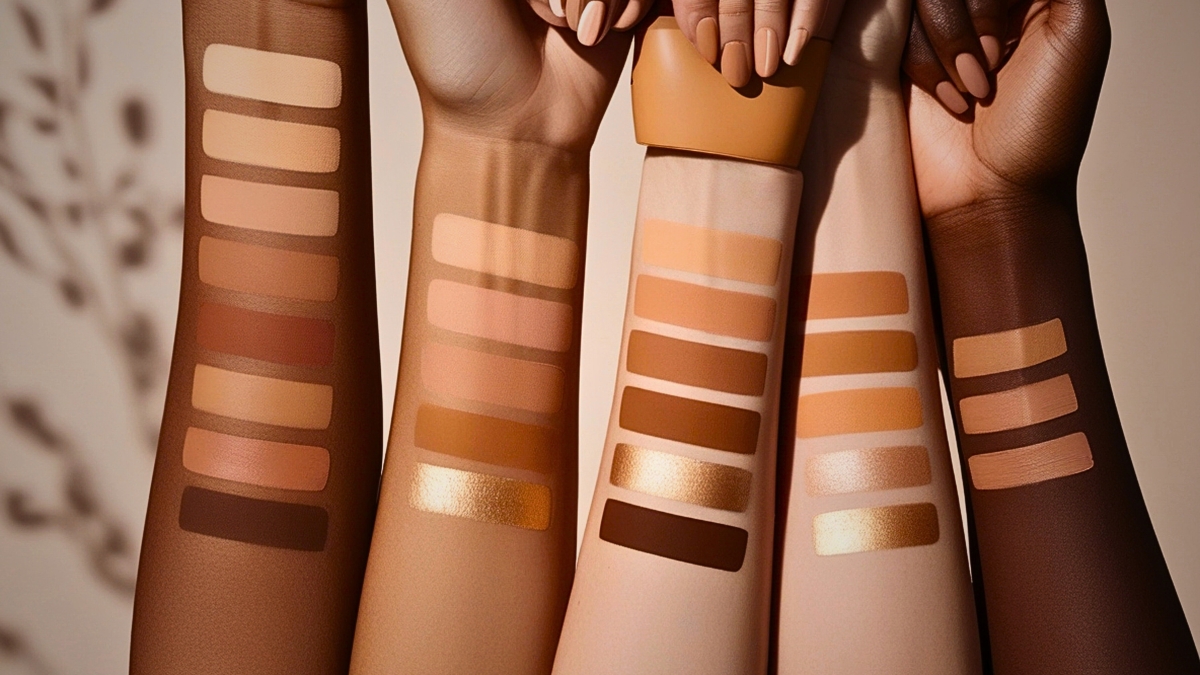
There’s something quietly psychological about this shift. In uncertain times — socially, politically, emotionally — self-expression tends to intensify. Fashion historians will tell you that bold aesthetics often surface when people crave agency.
Makeup in 2026 isn’t just decorative. It’s therapeutic.
-
Color-drenched lashes act like visual exclamation points.
-
Multichrome eyes mirror emotional complexity — never just one thing at a time.
-
Velvet finishes replace sterile glass-skin trends with something human, textured, touchable.
This isn’t rebellion for rebellion’s sake. It’s sensory grounding. In a world obsessed with metrics, filters, and optimisation, beauty has decided to feel something again.
The Rise Of The “Visible Face”
One of the more fascinating shifts this year is the rejection of invisibility as a virtue. The goal is no longer to look “naturally perfect.” The goal is to look intentional.
Makeup artists report clients asking for looks that announce themselves. Not necessarily louder — just more personal. A neon inner corner paired with an otherwise bare face. Chrome lids with no mascara. A single disruptive color used like punctuation.
The rules haven’t disappeared. They’ve become optional.
And for brands, this has forced a reckoning.
The Industry Loves Expression — Until It Gets Complicated
On the surface, beauty brands are thrilled. Bold makeup sells. Pigments photograph well. Color stories refresh product lines that were beginning to blur together.
But there’s a quieter tension underneath.
Expressive makeup doesn’t standardise easily. It resists mass templates. One person’s “liberating” look is another’s “too much.” That makes it harder to market universally — and harder to control.
Brands now face a dilemma:
-
Do they genuinely support individuality?
-
Or do they simply repackage rebellion into shoppable trends?
The smartest players are adapting by releasing modular products — pigments meant to be layered, mixed, and misused. Less instruction, more invitation. Others, predictably, are trying to monetise chaos while still dictating how to apply it.
Consumers notice the difference.
When Makeup Stops Asking For Permission
Perhaps the most radical thing about 2026 beauty isn’t the color — it’s the attitude. There’s a noticeable absence of justification.
No more:
-
“This is wearable if styled correctly”
-
“You can tone it down for daytime”
-
“It’s bold, but still elegant”
The apology tour is over.
Makeup is being worn because someone wanted to wear it. Full stop.
That confidence has spilt beyond social media into runways, editorials, and even corporate campaigns that would’ve once demanded restraint. The face is no longer required to look neutral to be taken seriously — a subtle but significant shift.
Not Everyone Is On Board — And That’s The Point
Of course, there’s pushback. There always is.
Critics argue that bold makeup is exclusionary — that it privileges time, money, and confidence. Others worry the trend will swing too far, turning self-expression into performance pressure.
There’s truth there.
Expressive beauty, when commodified, can become another expectation. Another thing to “keep up with.” The industry must tread carefully, or it risks replacing one rigid standard with another — this time painted in neon.
But here’s the difference: 2026 beauty doesn’t insist you participate. It simply makes space if you want to.
Why This Shift Feels Different From Past Trend Cycles
This isn’t just maximalism repeating itself. It’s not a retro revival or a seasonal indulgence. The emotional context matters.
People are curating identities across platforms, redefining work-life boundaries, and questioning aesthetics tied to status and conformity. Makeup is responding accordingly — not by instructing, but by offering tools.
In that sense, bold makeup isn’t loud. It’s honest.
It reflects a broader cultural truth: people are done shrinking themselves for the sake of palatability.
What Comes Next For Beauty In 2026 And Beyond
Expect more:
-
Hybrid textures that prioritise feel as much as finish
-
Products designed for experimentation, not perfection
-
Campaigns that showcase variation instead of uniformity
-
Creators valued for perspective, not polish
And yes, expect the pendulum to swing again someday. It always does. But this moment — this visible, colorful, slightly chaotic era — feels earned.
After years of whispering, beauty remembered how to speak in its own voice.
Sometimes softly. Sometimes loudly. Always deliberately.