
Surat (Gujarat) [India], October 8: The Man-Made Textiles Research Association (MANTRA) has completed 49 glorious years since its establishment and entered its 50th year. This important occasion is being celebrated as per the directions of the Ministry of Textiles, Government of India. As part of this, a special celebration programme has been organised on October 09, 2026, from 4.00 p.m. onwards at Hotel Marriott, Surat.
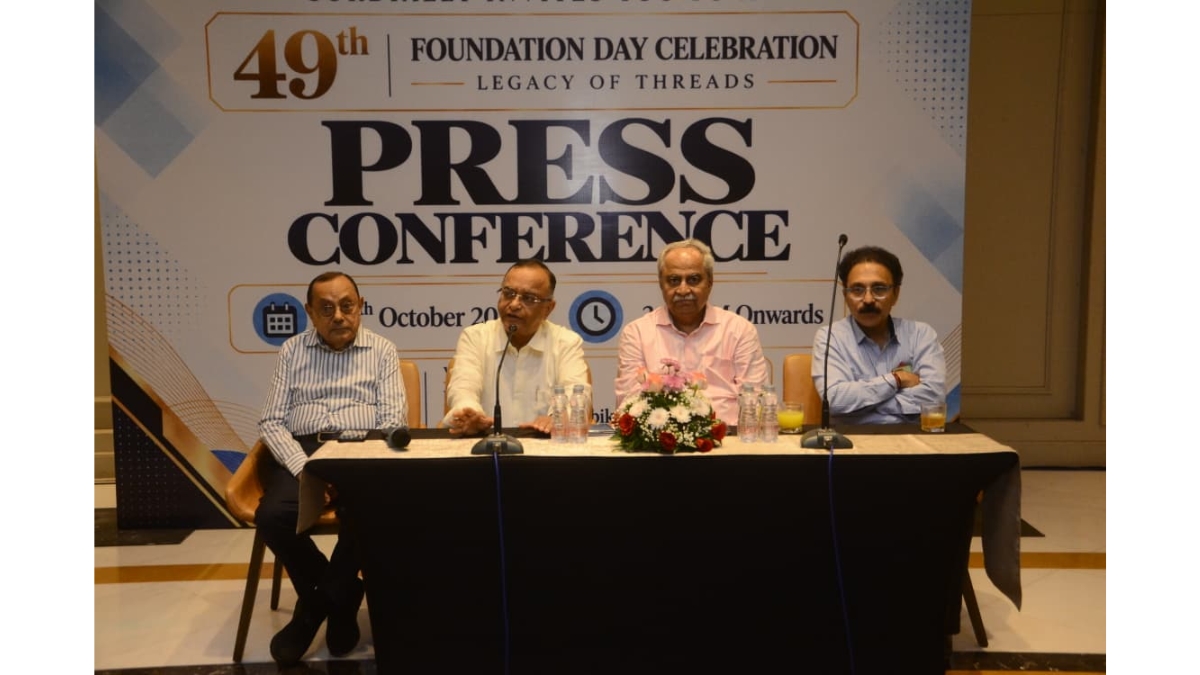
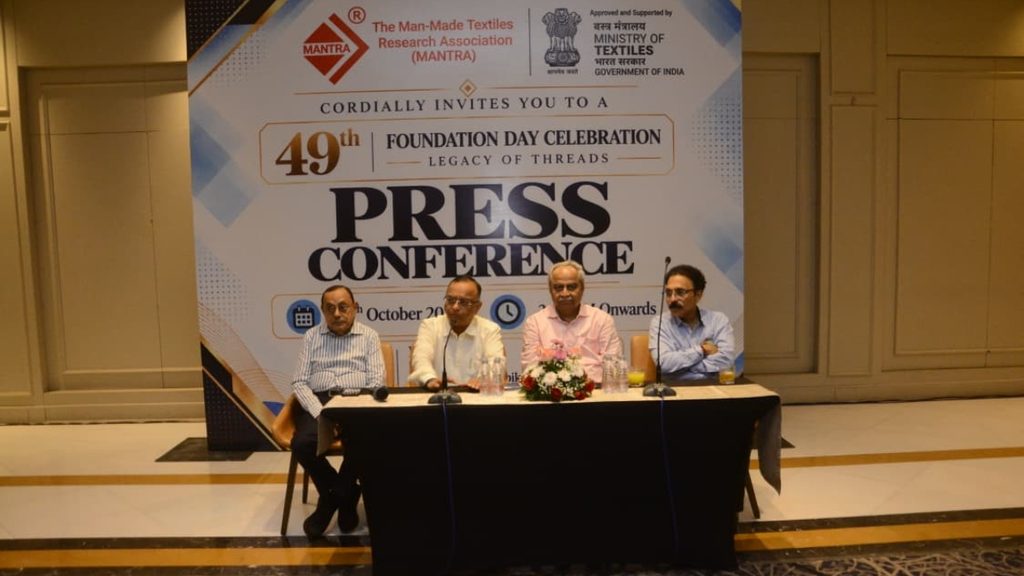
A press conference was organised at MANTRA today to provide information regarding this celebration programme. At the press conference, MANTRA President Shri Rajnikant Bachkaniwala presented the complete outline of the programme.
The President stated that Union Textiles Minister of the Government of India Shri Giriraj Singhji will be present as the Chief Guest at the special programme to be held on October 09. In addition, distinguished officials of the Ministry of Textiles, Government of India, and the Office of the Textile Commissioner will also remain present at the programme and witness this important occasion of MANTRA’s 49-year journey.
During the press conference, the President presented detailed information before the press media regarding MANTRA’s 49 years of work since its establishment, various research activities, technical services and MANTRA’s contribution to the development of the textile industry.
On this occasion, information was also provided regarding the current status of Surat’s textile industry. The President presented the current textile-related trade figures of Surat city as well as the export trade figures of Surat’s textile sector as given below, highlighting the importance of Surat’s textile industry at the national and international level.
Surat today is not only India’s textile city, but has become a large and integrated industrial centre for man-made fibre (MMF), yarn, weaving, processing, dyeing, printing, embroidery, textile trading and now technical textiles. The textile industry of Surat and South Gujarat provides direct and indirect employment to lakhs of people and makes an important contribution to Gujarat’s industrial economy. According to the Gujarat Government’s 2026 report, the textile industry of Surat and South Gujarat contributes more than 25 percent to Gujarat’s GDP. However, this figure is not for Surat city as a whole but for the textile sector of Surat and South Gujarat. Surat’s speciality is that the complete value chain, from raw material to yarn, weaving, processing, dyeing-printing, embroidery, garmenting and finished textiles, is available in a single region.
Important Figures of Surat’s Textile Industry
- Daily textile production: Approximately 6 crore metres production capacity per day.
- Share in India’s man-made fabric: Approximately 40%.
- Share in India’s MMF sector: Approximately 65%, according to the Gujarat Government’s 2026 estimate.
- Share in global fabric production: Approximately 30%, according to the Gujarat Government’s 2026 regional estimate. It would be appropriate to present this figure as a government estimate.
- Direct and indirect employment: Approximately 18 to 20 lakh people.
- Annual textile turnover: Approximately ₹1.5 lakh crore.
- Powerlooms: Approximately 6 to 7 lakh.
- Shuttle looms: Approximately 5.7 lakh, according to an old official cluster study.
- Shuttleless looms: Approximately 22,600, including water-jet, rapier and projectile looms.
- Embroidery machines: Approximately 1 lakh, according to recent industry estimates.
- Dyeing and printing/textile processing houses: More than 600.
- Total textile units in Surat: More than 40,000, according to various industry estimates.
Registered MSMEs in Surat district: Approximately 5,01,024 MSMEs, according to Udyam Portal figures, including 4,89,247 micro, 11,079 small and 698 medium enterprises. This figure is for MSMEs across all sectors, not only textiles.
Technical textile companies: More than 100 technical textile manufacturing companies can be identified in Surat according to available commercial databases; however, a complete official unit-wise government survey is not available for this.
Textile cluster: The main traditional industrial textile clusters of Surat include Pandesara, Sachin, Kadodara and Palsana, in addition to several integrated textile parks and MSME industrial areas in South Gujarat.
Yarn production: According to an old official cluster study, only the texturising and twisting segment had approximately 6 lakh metric tonnes per year of production capacity; this should not be presented as the total yarn production of Surat.
Grey fabric production according to the old official cluster: Approximately 800 crore metres per year.
Textile and apparel exports: Surat’s textile and apparel exports were recorded at approximately ₹10,478 crore in FY 2025–26.
Contribution of the textile sector of Surat and South Gujarat to Gujarat’s GDP: More than 25%, according to the Gujarat Government’s 2026 regional assessment.
Digital textile printing machines: A reliable and recent official survey of the total number in Surat is not available; therefore, it would be more appropriate not to announce a specific number at the press conference.
Important Message for MANTRA
These figures show that Surat has a large-scale textile production capacity and a world-class industrial ecosystem, but the next phase is not only about increasing production, but moving towards more value-added, sustainable, smart and technical textiles. MANTRA’s role can become extremely important in this transformation. By developing technology in research, product development, material characterisation, testing, certification, technical textiles, sustainability and in accordance with international quality standards, MANTRA can become a “research and testing centre connecting Surat’s textile production strength with global technology and quality.”
The main message that can be used most safely at the press conference:
“Surat has the capacity to produce approximately 6 crore metres of fabric every day, provides direct and indirect employment to 18 to 20 lakh people in the textile sector, has 6 to 7 lakh powerlooms, more than 600 processing houses and nearly 1 lakh embroidery machines, and is now moving from traditional textiles towards technical textiles and high value-added products.”
At the press conference, MANTRA Director Dr. Pankaj Gandhi presented detailed information before the press media regarding various research projects undertaken by MANTRA during the last 49 years, research activities, and technical and research services provided to the textile industry. He also highlighted the efforts being made by MANTRA in the field of research and development according to the needs of the industry, as well as future possibilities.
On this occasion, MANTRA Hon. Secretary Shri Prafulbhai Gandhi along with other office-bearers of MANTRA were also present.
At the end of the press conference, MANTRA President Shri Rajnikant Bachkaniwala expressed his gratitude to all media representative brothers for being present in large numbers and making the press conference successful, and concluded the press conference.

