
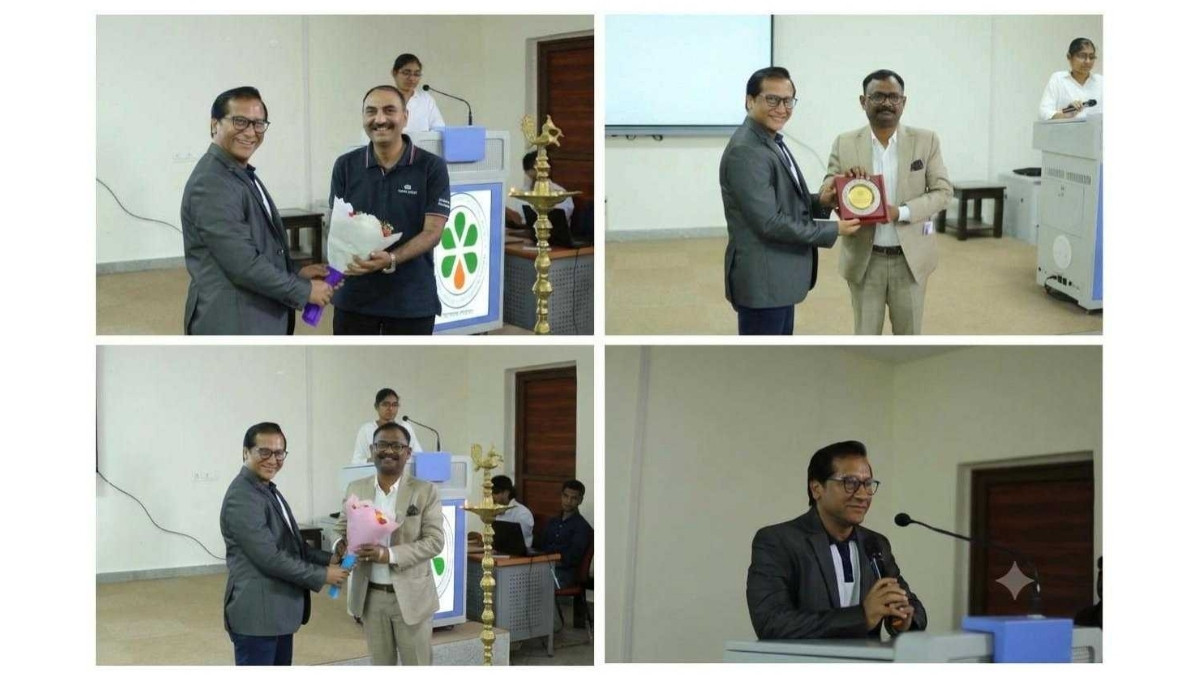
“Navigating Future Workforces: Innovation, Sustainability, and Talent Strategy”
Bengaluru (Karnataka) [India], September 28: The Rajiv Gandhi Institute of Petroleum Technology (RGIPT) Bengaluru Campus hosted HR Conclave 2026, bringing together leaders from industry, technology, human resources, entrepreneurship and academia to examine how artificial intelligence, automation and changing business models are reshaping the workplace and the capabilities young professionals will need to succeed.
Held on the theme “Navigating Future Workforces: Innovation, Sustainability, and Talent Strategy,” the Conclave provided students with practical perspectives on leadership, employability, entrepreneurship, continuous learning and the growing importance of connecting technical knowledge with human, organisational and technological capabilities.
RGIPT’s Vision: Preparing Leaders, Not Followers
Addressing the Conclave, the Director of RGIPT emphasised that the Institute’s objective should go beyond preparing students for employment. Every RGIPT student, he said, should aspire to become a leader of tomorrow.
He stressed that leadership begins with personal quality, discipline, integrity and a willingness to continuously learn. Students should develop the habit of recognising good qualities in others and learning from them while also building the confidence to think independently. The aim, he emphasised, should not be to produce followers, but young people who can take responsibility, lead teams, create solutions and contribute positively to society and industry.
The Director also highlighted the need for RGIPT to broaden its academic and industry connect. While the Institute has built a strong identity in petroleum and chemical engineering, the changing technology landscape calls for deeper engagement with electrical and electronics engineering, computer science, digital technologies and leading multinational companies. Such connections, he noted, can expand students’ exposure to emerging technologies, interdisciplinary work and new career opportunities.
From Automation to AI: Redefining Human Capability
Chief Guest Mr. Kenneth Lean, CEO & ED, Cognitive Prism, traced the evolution from machines and industrial automation to artificial intelligence. He noted that automation has changed the nature of work rather than simply eliminating the need for people. As machines increasingly perform repetitive tasks, human roles have progressively moved towards designing, programming, improving and managing such systems.
He posed an important question for education: as machines become capable of performing more tasks traditionally taught to people, what should education prepare students for? His message was that future-ready education must go beyond learning how to use AI tools. Students need to identify meaningful problems, ask the right questions, think critically, design solutions, exercise judgement and work effectively with intelligent technologies.
With information now readily available through digital platforms and AI systems, knowing information alone is becoming less important than knowing how to evaluate and use it. Mr. Lean emphasised curiosity and questioning—asking “Why?”, “Why not?” and “Could I be wrong?”—as important habits for deeper thinking.
Adaptability and Continuous Learning
Dr. Ramesh Singh, Senior Principal Manager, TATA Elxsi, emphasised adaptability, innovation and continuous learning. He observed that individuals and organisations can become comfortable with familiar ways of working even as external conditions change. For students and professionals, remaining relevant therefore requires understanding where their chosen field is heading and continuously aligning their skills with emerging requirements.
Dr. Singh also highlighted the growing integration of technology and management. Future professionals will need to understand not only technology, but also people, organisations and the environment in which technology is applied.
Building a Stronger Education–Industry Connect
A central message emerging from the Conclave was the need for continuous interaction between educational institutions and industry. As industry requirements change, academic programmes, curricula and learning approaches must evolve accordingly. Engagement with industry can help students understand emerging technologies, workplace expectations and the skills required for new roles.
For RGIPT, this industry connect is particularly relevant as the Institute expands beyond its established strengths in petroleum and chemical engineering towards a wider technology ecosystem. Stronger engagement with electrical and electronics, computer science, digital technology and multinational companies can help create opportunities for interdisciplinary learning, industry exposure, internships, projects and future employment.
Entrepreneurship and the Future of Work
The panel discussions brought these themes into a practical context through the speakers’ entrepreneurial and professional experiences. Students engaged with questions related to entrepreneurship, funding, business potential, skills, temperament and self-discovery.
Panelists encouraged students to identify genuine problems, recognise their strengths, take calculated risks and develop resilience. The discussions on AI considered how software development and other roles may change, which tasks may be automated or transformed, and how new careers and business opportunities may emerge.
Students were encouraged to look beyond conventional career paths and develop a problem-solving and entrepreneurial mindset by combining domain expertise, creativity, technology and continuous learning.
Preparing RGIPT Students for Tomorrow
The HR Conclave highlighted that the future of work is not simply about machines replacing people. It is about the changing relationship between people, technology, organisations and society—and about preparing individuals to make meaningful contributions in that environment.
The discussions reinforced the importance of curiosity, judgement, communication, collaboration, adaptability, resilience, self-awareness and continuous learning. For RGIPT, these capabilities complement its technical foundation and support the Institute’s broader objective of preparing students to take leadership roles in an increasingly interconnected technology and industry landscape.
The Conclave concluded with a message of confidence and action for the young generation:
“I can do. I will do.”
Guests and Speakers
Chief Guest: Mr. Kenneth Lean, CEO & ED, Cognitive Prism
Guest of Honour: Dr. Ramesh Singh, Senior Principal Manager, TATA Elxsi
CDC Chairperson: Prof. Jaya Srivastava, RGIPT Bengaluru Campus
Panel 1: Mr. Sushil Kumar, Chief Manager (HR), HRRL; Mr. Deepak G, Lead Industrial Engineer & Operations Manager, Tata Semiconductor; Ms. Prachi Bansal, HR Manager, American India Foundation
Panel 2: Mr. Pulakesh Sen, Founder & CEO, Unikul Solutions; Mr. Naveen Roy, Co-Founder & CEO, Canvas Workspace; Mr. Navnit, Founder & CEO, NAAVI; Mr. Adarsh H M, Co-Founder, Elcarreira Technologies; Mr. Vinay Annappa, Founder & CEO, Energy As Solution & Director, Magnus Copo
If you object to the content of this press release, please notify us at [email protected]. We will respond and rectify the situation within 24 hours.